How to Check Your Dog’s Teeth at Home: A 5-Step Oral Health Checklist
Most Pet Parents only look inside their dog’s mouth when something already seems wrong: a strong smell, a dropped piece of food, or a dog who suddenly avoids their favorite chew toy.
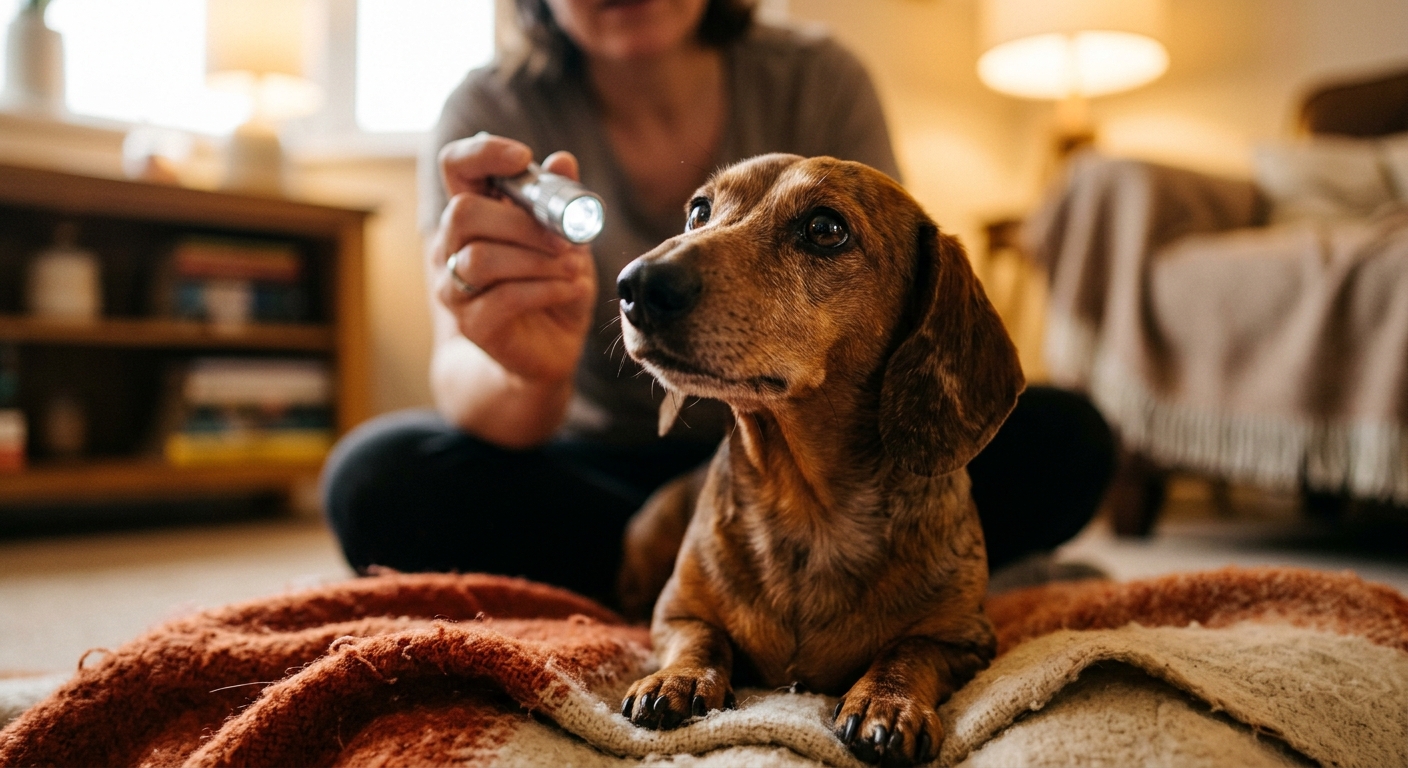
A quick, regular check changes that. It gives you a baseline, helps you notice small changes early, and brings real peace of mind. The routine takes about two minutes, and you can do it at home.
Before You Start: Keep It Calm
How you approach the check matters as much as what you look for. Borrowing from Low-Stress Handling:
- Choose a quiet moment, when your dog is already relaxed
- Keep sessions short, even 30 seconds is enough at first
- Reward with a treat and praise afterward
- Stop if your dog tenses, pulls away, or growls. Never force it
If your dog is uncomfortable having their mouth touched, that is useful information too.
It may also mean that at-home oral care is harder to maintain consistently, which can make regular professional preventive sessions even more important.
Step 1: Smell
Start with the simplest signal.
A dog’s breath does not need to smell perfect, but a strong or persistent odor is worth noticing.
- Mild breath can be normal
- A sharp, sour, or consistently strong smell is worth noting
- A sudden change in breath deserves attention
Persistent odor can sometimes be related to buildup or changes in the mouth, so it is useful to track rather than ignore.
Step 2: Gums
Gently lift your dog’s lip on one side and look at the gumline.
- Healthy gums are often pink, although some dogs naturally have dark or spotted pigmentation
- Changes to watch for: redness, swelling, bleeding, or gums that appear to be pulling away from the teeth
Take note of any area that looks different from the rest.
Comparing one side of the mouth to the other can make subtle changes easier to notice.
Step 3: Teeth Surfaces
Look at the teeth themselves, especially where they meet the gums.
- Yellow or brown buildup may be tartar
- Check the larger back teeth, where buildup can accumulate
- Look for chips, cracks, or discoloration
- Notice any tooth that appears loose or out of position
You do not need to diagnose what you see.
The goal is simply to become familiar with what is normal for your dog.
Step 4: Eating and Behavior
Dogs do not always show oral discomfort in obvious ways, so changes in behavior can be useful clues.
Watch for:
- Chewing on one side only
- Dropping food
- Eating more slowly than usual
- Pawing at the face
- Rubbing the mouth against furniture
- Drooling more than normal
- Avoiding hard food or favorite chews
- Pulling away when the face or mouth is touched
If you notice a persistent change, it is worth discussing with a professional.
Step 5: Record and Compare
This step turns a one-time check into a useful habit.
- Take a photo of your dog’s teeth and gums once a month
- Try to use similar lighting and angles
- Write down anything you notice
- Compare photos over time
Gradual changes are easy to miss day to day, but much easier to notice when you have something to compare.
What Your Checklist Might Be Telling You
| What you notice | What it may mean | Next step |
| Yellow or brown buildup, mild odor | Tartar or plaque accumulation | Consider a preventive session |
| Red or swollen gums | Possible inflammation | Monitor and seek professional guidance if it persists |
| Loose, cracked, or broken teeth | May require care beyond preventive hygiene | Veterinary evaluation |
| Bleeding, facial swelling, refusing food | May indicate a more significant oral issue | Contact your veterinarian promptly |
When to See Your Veterinarian
Home checks are for noticing, not diagnosing.
Contact your veterinarian if you see:
- Facial swelling
- Bleeding from the mouth
- A loose or broken tooth
- Sudden refusal to eat
- Significant pain when the mouth is touched
Dogdom focuses on preventive oral hygiene and does not replace veterinary diagnostics or treatment.
What If You Cannot Properly Check Your Dog’s Mouth at Home?
Not every dog is comfortable with having their mouth touched.
If your dog pulls away, becomes tense, or does not tolerate brushing or regular at-home checks, that does not mean you have to guess what is happening in their mouth.
It simply means you may need more professional support.
When at-home hygiene is limited, preventive sessions may need to happen more frequently because there is less plaque control happening between visits.
Dogdom can also help when you are unsure what you are looking at.
During every preventive session, our Dental Hygienist performs a general visual assessment of the mouth and provides:
- Before-and-after photographs
- A documented dental report
- Notes on visible changes in the teeth and gums
- Recommendations for future preventive care
- Clear guidance if something appears to require veterinary evaluation
So even if you are not confident identifying gum recession, mobility, fractures, inflammation, or other changes yourself, you are not expected to figure everything out alone.
How Dogdom Supports Ongoing Oral Monitoring
A Dogdom preventive session is not only about removing visible buildup.
It is also an opportunity to document the condition of your dog’s mouth and compare findings over time.
If we see something within the scope of preventive oral hygiene, we explain what we found and recommend an appropriate maintenance schedule.
If we identify something that appears to require treatment beyond what Dogdom provides, such as veterinary diagnostics, extractions, or procedures below the gumline, we tell you clearly and recommend veterinary evaluation.
That way, Pet Parents leave with more than cleaner teeth.
They leave with a better understanding of what is happening in their dog’s mouth.
Make the Check a Habit
A quick home check once a week, plus a monthly photo, can help you become more familiar with your dog’s oral health.
But if your dog does not tolerate at-home checks, or you are not sure what you are seeing, that is exactly where professional preventive care can help.
Want help understanding what is happening in your dog’s mouth?
Book a preventive session with Dogdom and receive professional oral hygiene without anesthesia, visual documentation, and a detailed dental report.