

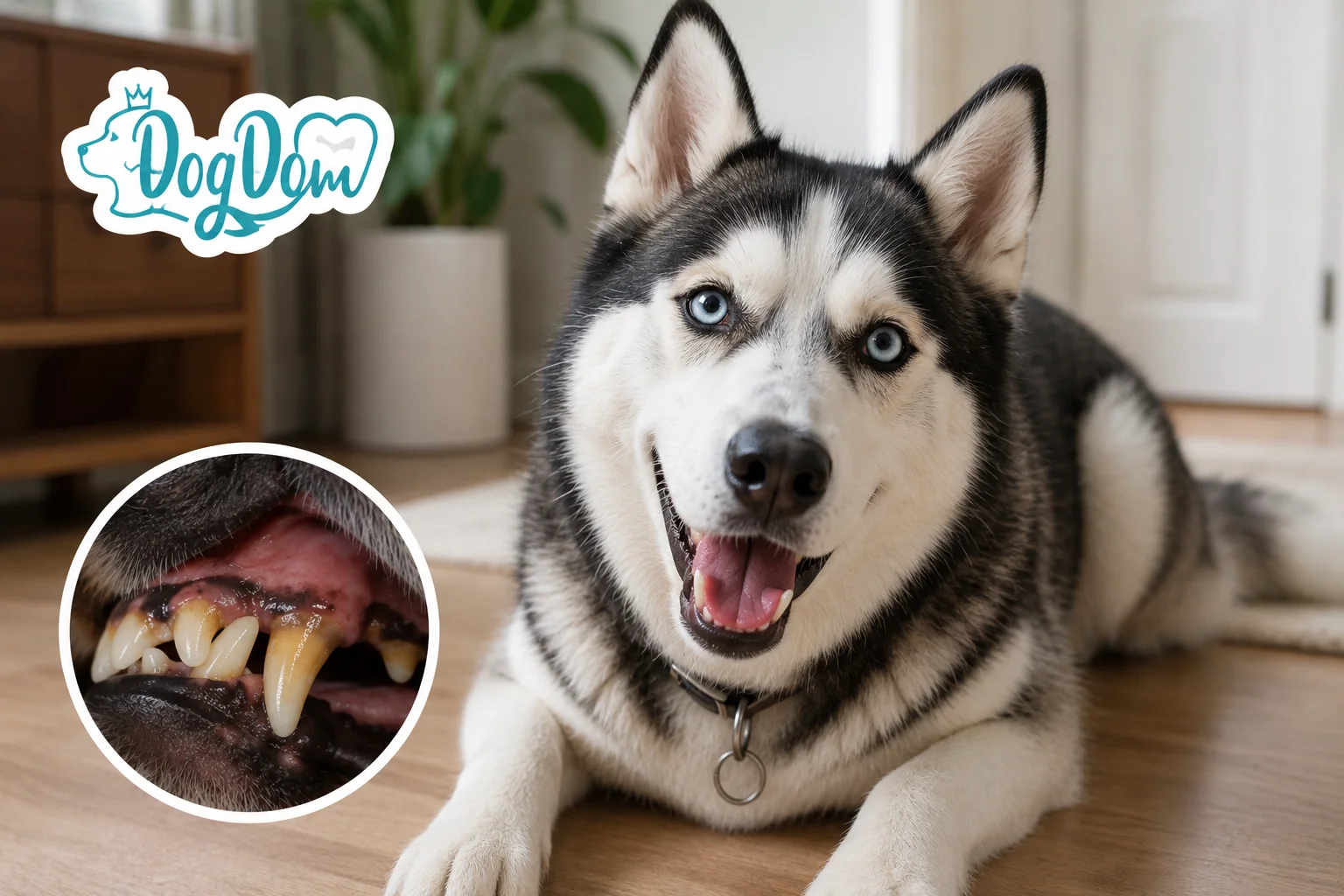
Why Does My Dog Have Bad Breath? Common Causes and Real Solutions
“Dog breath” is treated like a joke — something every dog owner just learns to live with. But here’s the truth: persistent bad breath in dogs is almost never normal. It’s usually your dog’s mouth telling you something, and ignoring it just lets the underlying problem grow.
Let’s go through the real causes, and what actually solves each one.
Cause #1: Plaque and Tartar Buildup
The most common cause by far. Bacteria in your dog’s mouth combine with food particles to form plaque, which hardens into tartar within days if it isn’t removed. That tartar is where the smell lives — it’s essentially a colony of odor-causing bacteria sitting on your dog’s teeth.
- The fix: A preventive dental cleaning without anesthesia removes surface tartar at the source, rather than just freshening the smell temporarily.
Cause #2: Early Gum Disease (Gingivitis)
If the gums around your dog’s teeth look red, puffy, or bleed slightly when touched, that’s gingivitis — inflammation caused by bacteria at the gumline. It has a distinct, sharper odor than plain tartar buildup.
- The fix: Gingivitis is reversible in its early stages with a thorough cleaning and consistent at-home care. Left untreated, it progresses into full periodontal disease, which is much harder to reverse.
Cause #3: Diet and Digestive Issues
Sometimes bad breath isn’t dental at all — it’s coming from the stomach. Certain diets, food sensitivities, or digestive issues can cause breath that smells different from typical “dog breath” (more sour or acidic than musty).
- The fix: If a dental hygiene routine doesn’t resolve the smell, it’s worth mentioning to your veterinarian, since this can point to something beyond the mouth.
Cause #4: Retained Baby Teeth or Broken Teeth
Occasionally, bad breath comes from a specific problem tooth — a retained baby tooth trapping debris, or a cracked tooth harboring infection.
- The fix: This usually needs veterinary attention, sometimes including anesthesia if extraction is required. A routine hygienic cleaning is often what catches this early before it becomes a bigger issue.
What Doesn’t Actually Work
A lot of “solutions” pet parents try only mask the smell instead of fixing the cause:
- Breath mints and sprays: Cover the smell for a few hours at best.
- Chew toys alone: Help a little with mechanical plaque removal, but don’t remove existing hardened tartar.
- Diet changes alone: Can help slightly with mild cases, but won’t touch tartar that’s already solidified on the teeth.
If the smell keeps coming back within a day, you’re treating a symptom, not the cause.
What Actually Works
- A preventive dental cleaning without anesthesia to remove existing mild-to-moderate tartar at the source.
- Regular at-home brushing (2–3 times a week) to slow down new plaque buildup.
- Routine maintenance cleanings every 6 months so tartar never gets the chance to build up enough to smell in the first place.
Fresh Kisses Start with Prevention
Bad breath is your dog’s mouth flagging a problem — not a personality trait. In almost every case, it’s treatable, and often the fix is simpler, safer, and more affordable than pet parents expect.
At Dogdom, we perform mobile dog dental cleanings without anesthesia right at your home in Miami — no sedation, no stressful vet visit, just a straightforward way to get to the actual cause of the smell and bring back those fresh kisses.
Ready to find out what’s really behind your dog’s bad breath? Book with Dogdom today — we’ll help your dog smile with confidence again!