
What Is a Dental Hygienist for Dogs? The Science and Technique Behind Preventive Care
Not every person who works near a dog’s mouth is trained to the same standard. The term “Dental Hygienist” implies a specific set of skills, and understanding what that role actually involves helps Pet Parents know what they’re trusting their dog with.
At Dogdom, our Dental Hygienist is the foundation of every preventive session—not an assistant performing a generic service, but a trained professional applying specific technique, hygiene standards, and clinical judgment to each individual patient.
What Does a Dental Hygienist Actually Do?
A Dental Hygienist working in preventive oral hygiene without anesthesia is responsible for far more than removing visible buildup.
Their role includes:
- Assessing the mouth before any handling begins, identifying the extent of tartar, inflammation, or other visible concerns
- Applying hand scaling technique to remove calcified plaque above the gumline, using the correct angle and pressure to protect enamel
- Practicing Low-Stress Handling, adjusting pace and positioning based on how each dog responds
- Recognizing when a case falls outside preventive scope, such as conditions that may require veterinary diagnostics or treatment
- Following appropriate sanitation and hygiene protocols before, during, and after each preventive session
This combination of clinical knowledge, hands-on technique, and professional hygiene standards is what separates trained preventive care from a generic service.
Why Does Technique Matter More Than Speed?
Removing tartar incorrectly can damage enamel or irritate gum tissue, even if the visible result looks similar at first glance.
Proper technique involves:
- Correct instrument angle against the tooth surface, rather than scraping indiscriminately
- Controlled pressure that removes calcified plaque without gouging healthy enamel
- Systematic coverage of each tooth surface, rather than focusing only on the most visible areas
- Polishing after scaling, which helps smooth the tooth surface after calculus removal
A rushed or untrained approach can leave buildup behind in harder-to-reach areas or compromise the quality of the preventive session.
Why Do Sanitation Standards Matter?
Professional preventive oral care is not only about technique. It is also about maintaining a clean, controlled working environment.
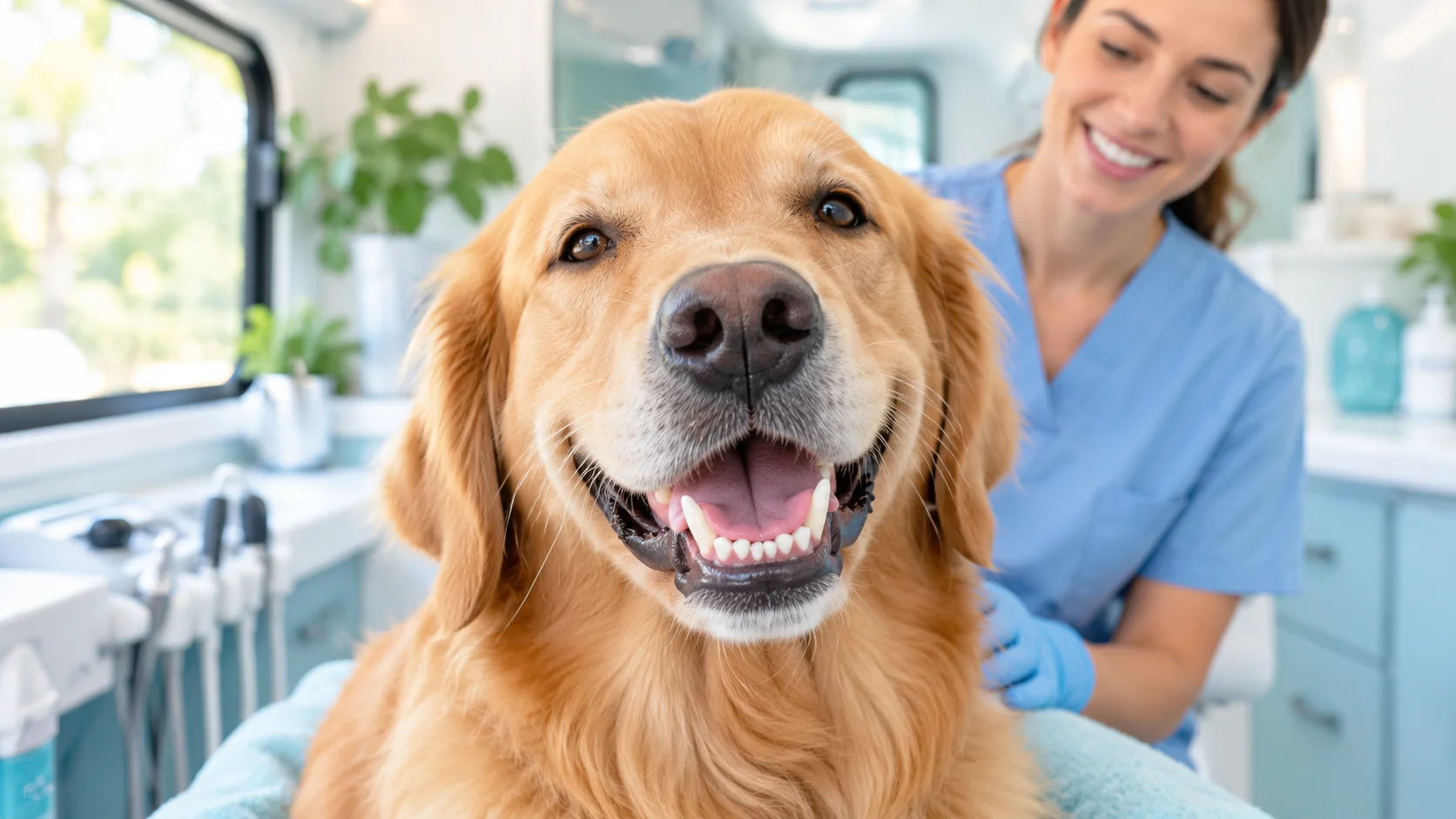
At Dogdom, our Dental Hygienists follow hygiene and sanitation practices appropriate for oral care, including:
- Wearing gloves during the procedure
- Using a face mask while working near the mouth
- Wearing appropriate hair protection
- Working with properly cleaned and prepared instruments
- Maintaining clean working surfaces and equipment
- Following sanitation protocols between patients
These practices help maintain a professional standard of care and reduce unnecessary cross-contamination between appointments.
For Pet Parents, this is another important difference between a trained professional service and an informal approach to oral care.
How Does Training Translate Into Low-Stress Handling?
Technical skill and patient handling are not separate skills—they work together.
A Dental Hygienist trained in Low-Stress Handling understands:
- How to read early signs of stress in body posture, breathing, and movement
- When to pause, slow down, or adjust positioning before resistance builds
- How to adapt hand scaling technique as a dog shifts or moves
- How to maintain a calm, consistent approach throughout a preventive session
The dog remains awake throughout the process, so skilled, adaptive handling is essential.
What Happens When a Case Needs More Than Preventive Care?
Part of professional training includes recognizing limits.
Dogdom focuses on preventive oral hygiene. We do not perform tooth extractions or procedures below the gumline.
If our Dental Hygienist identifies a condition that appears to require treatment beyond the scope of the service, we explain what we are seeing and recommend veterinary evaluation.
Professional care is not only knowing what to do.
It is also knowing when a case requires a different level of treatment.
What This Looks Like at Dogdom
Every Dogdom preventive session includes:
- A visual oral assessment performed by our Dental Hygienist
- Individualized Low-Stress Handling adapted to your dog’s behavior
- Hand scaling and polishing using proper technique
- Professional sanitation and hygiene protocols
- Before-and-after photographs and a detailed dental report
- Clear guidance when something falls outside preventive scope
The goal is consistent, skilled preventive care supported by proper technique, professional hygiene standards, and clear clinical judgment.
Trained Expertise Across South Florida
For Pet Parents, knowing that a trained Dental Hygienist is performing your dog’s preventive session adds an important layer of trust.
Dogdom brings mobile preventive oral hygiene without anesthesia directly to Pet Parents across Miami-Dade County, Broward County, Palm Beach County, and the Florida Keys, combining professional technique, Low-Stress Handling, sanitation standards, and individualized preventive care.
Looking for a trained Dental Hygienist for your dog’s preventive oral hygiene?
Book a preventive session with Dogdom and experience care backed by professional technique, hygiene standards, and clinical judgment.